

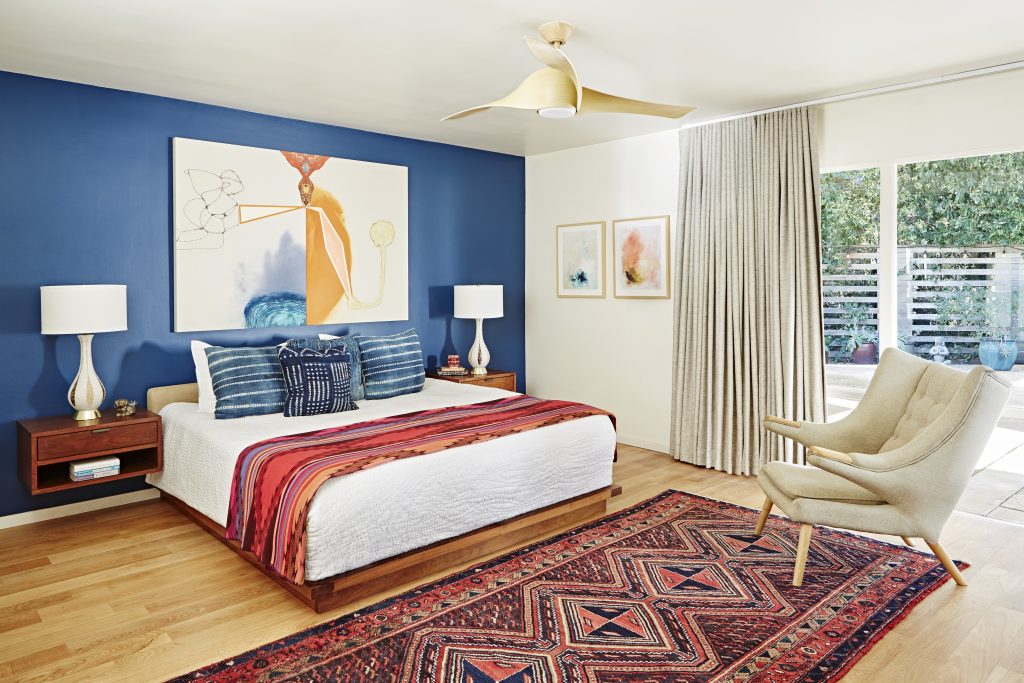
Choosing a single paint color for one room is manageable. Choosing colors for an entire home that feel connected, intentional, and harmonious as you move through doorways and sightlines is where most homeowners get stuck — and where expensive mistakes happen. The problem isn’t a lack of beautiful individual colors. It’s that colors behave differently depending on what’s next to them, what light they’re receiving, and what undertones they carry beneath the surface color your eye initially sees. A warm gray that looks perfect in your living room sample can turn purple next to the cool blue you chose for the adjacent hallway, and a creamy white that felt soft and inviting on a paint chip can read yellow and dingy when it shares a sightline with the crisp white trim in the next room. These clashes don’t reveal themselves until the paint is on the walls and you’re standing in a doorway seeing both colors simultaneously — the exact moment it’s too late to fix without repainting.
Why Colors That Look Perfect Alone Clash Together
The root of most whole-home color failures is undertone conflict. Every paint color — even colors that appear neutral — carries an undertone beneath its surface appearance. Grays carry blue, green, purple, or warm brown undertones. Whites carry yellow, pink, blue, or green undertones. Beiges carry yellow, pink, orange, or green undertones. These undertones are often invisible when you look at a color in isolation but become dramatically apparent when two colors with conflicting undertones sit adjacent to each other. A gray with a purple undertone next to a gray with a green undertone creates visual tension that homeowners describe as “something feels off” without identifying exactly what’s wrong. The colors don’t obviously clash the way red and orange might, but the underlying chromatic disagreement registers subconsciously and makes transitions feel jarring. The foundational rule of whole-home color flow is that every color in your palette should share a compatible undertone family, even when the colors themselves vary in depth, hue, and saturation.
The Sightline Principle That Professional Colorists Use
Before selecting a single color, professional color consultants map a home’s sightlines — the visual corridors where you can see two or more rooms simultaneously. Stand in your main hallway and note every room visible through open doorways. Stand in your kitchen and identify what’s visible through the pass-through, the dining room entrance, and the living area opening. These sightline intersections are where color transitions either succeed or fail, and they should drive your entire palette strategy rather than being an afterthought after you’ve already fallen in love with individual room colors. In Atlanta’s popular open-concept renovations — particularly common in updated homes throughout Buckhead, Midtown, Sandy Springs, and Brookhaven — sightlines extend across enormous distances, sometimes allowing you to see four or five distinct spaces from a single vantage point. This architectural trend makes color flow exponentially more important than it was in the compartmentalized floor plans of older homes, where closed doors and narrow hallways isolated each room’s color from its neighbors.
Building Your Palette From a Single Anchor Color
The most reliable method for creating whole-home color flow starts with one anchor color and builds every other selection in relationship to it. Your anchor should be the color for the most visible, most frequently occupied space — typically the living room or open-concept main area. Choose this color first, identify its undertone precisely, and select every subsequent room color from within the same undertone family. If your anchor is a warm gray with a greige undertone, your dining room might move deeper within that same strip, your hallway might lighten to a pale warm gray, and your kitchen might shift to a warm white carrying that same yellow-brown base. None of these colors need to match — matching too closely creates a monotonous, institutional feel — but they all speak the same chromatic language. The easiest practical method for ensuring undertone compatibility is selecting colors from the same manufacturer’s coordinated strips. Companies group colors vertically by shared undertone, so moving up and down a single strip keeps you within a harmonious range without requiring formal color theory training.
How Atlanta’s Light Changes Everything About Your Color Choices
Light is the variable that transforms color selection from a simple swatch-matching exercise into a genuinely complex decision. Atlanta’s southern latitude delivers intense, warm-toned natural light for much of the year, amplifying warm undertones and pushing borderline colors noticeably warmer than they appear on a chip. A gray with a barely perceptible warm undertone in the paint store can read distinctly beige on a sun-drenched south-facing wall during afternoon light. North-facing rooms — common in Atlanta’s established neighborhoods where mature tree canopy filters incoming light — receive bluer, cooler illumination that amplifies cool undertones and can make warm colors appear muddy. This means the same color can look like two different shades depending on which room it occupies, and what flows beautifully from your south-facing living room might feel disconnected when it reaches the north-facing study. The practical solution is testing every color in the specific room it will occupy, at multiple times of day, using large sample patches. A twelve-by-twelve-inch painted sample on each wall reveals how that color responds to your room’s actual light throughout a full day cycle.
The Sixty-Thirty-Ten Framework for Depth and Interest
Whole-home color flow doesn’t mean every room should be the same intensity. Homes that feel professionally designed typically follow an approximate ratio: sixty percent of the visible space in a dominant neutral that establishes the baseline, thirty percent in a secondary tone that’s clearly related but offers contrast through deeper or lighter saturation, and ten percent in accent colors that provide energy and focal interest. Applied across a home, this might mean hallways, the main living area, and the primary bedroom occupy the sixty percent in your anchor neutral. The dining room, kitchen walls, and guest bedrooms take the thirty percent in a richer or lighter variation. And a powder room, accent wall, or home office claims the ten percent in a bolder expression that still shares the undertone DNA of the entire palette. This layered approach creates visual rhythm as you move through the home — enough variation to make each room feel distinct, enough consistency to make transitions feel intentional rather than accidental.
The Trim and Ceiling Question Nobody Asks Early Enough
Trim color and ceiling color function as the connective tissue that either unifies or fractures your whole-home palette, yet most homeowners select them as an afterthought. Your trim color appears in every single room — door frames, baseboards, crown molding, window casings — making it the most visible continuous element in the home. If your wall colors share a warm undertone family but your trim is a cool, blue-based white, every room will carry a subtle tension between walls and woodwork that undermines the flow you built into your wall palette. Match your trim undertone to your wall undertone family. Warm wall colors demand warm whites for trim — whites with yellow, cream, or barely pink bases. Cool wall palettes need cool white trim — whites with blue or gray undertones. The same principle applies to ceilings, which most homeowners default to flat white without considering which white. A ceiling painted in a cool bright white above walls in warm greige creates a visible disconnect where wall meets ceiling, while a ceiling in a soft warm white with a matching undertone makes the entire room feel cohesive and intentional.
Common Mistakes That Break the Flow
Several patterns consistently undermine whole-home color flow. Choosing room colors in isolation without considering adjacent spaces produces palettes that work individually but clash at transitions. Mixing paint brands introduces undertone inconsistency because each manufacturer formulates base tints differently — a warm gray from one brand may carry green undertones while a seemingly identical warm gray from another carries purple. Selecting bold accents that share no undertone relationship with the surrounding palette creates jarring focal points that draw attention for the wrong reasons. And ignoring fixed elements — existing flooring, countertops, stone fireplaces, tile work — pulls homeowners toward wall colors that fight the undertones already locked into their home.
Let OVO Painting Bring Color Confidence to Your Entire Home
Choosing paint colors that flow from room to room requires more than good taste — it demands understanding how undertones interact, how Atlanta’s light transforms color on your specific walls, and how every selection relates to the permanent materials already defining your spaces. That’s exactly the kind of guidance OVO Painting provides through our professional color consultation service. We help homeowners across Atlanta, Sandy Springs, Buckhead, Brookhaven, Alpharetta, Marietta, and Decatur build complete whole-home palettes that feel cohesive, intentional, and beautiful in their actual lighting conditions — not just on a paint chip under store fluorescents. Call our team today at (404) 630-2720 or visit ovopainting.com to schedule your free estimate, and let us take the guesswork out of the most visible decision you’ll make for your home.