

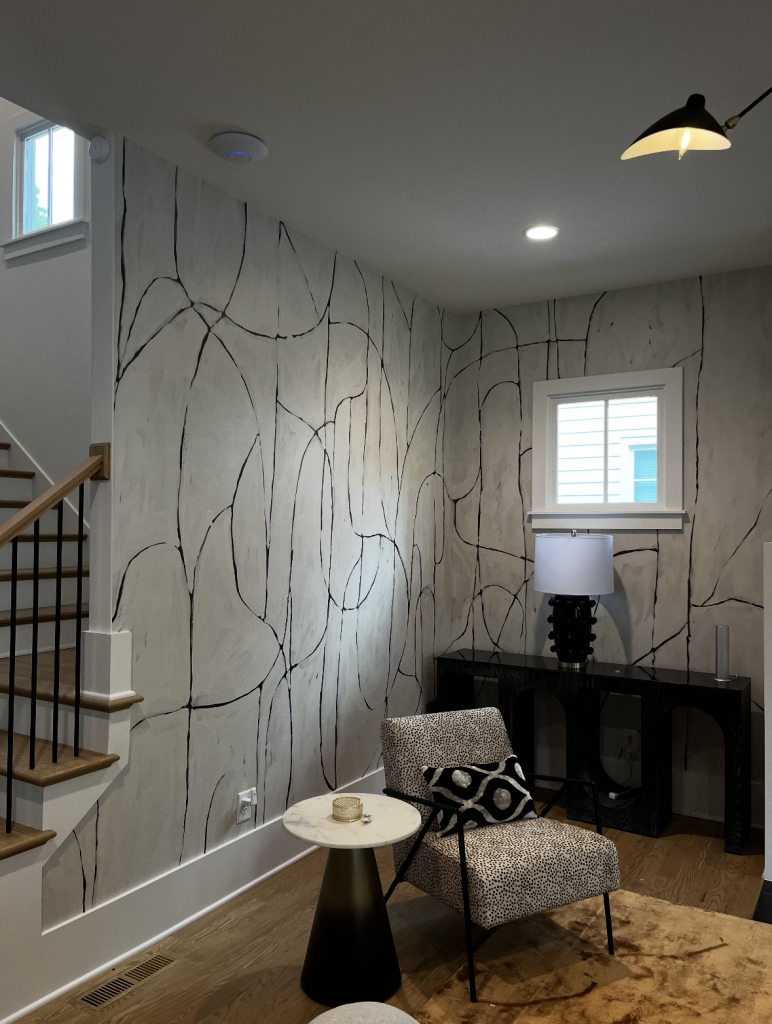
Walking into a room covered in dated wallpaper — the floral patterns from three decades ago, the textured grasscloth that seemed sophisticated in 1994, the vinyl borders running along every ceiling line — leaves most Atlanta homeowners asking the same question: can I just paint over this? The short answer is sometimes yes, but the longer and more honest answer is that painting over wallpaper successfully depends on conditions most homeowners don’t know how to evaluate, and getting the decision wrong leads to results far worse than either proper removal or properly executed painting over would have produced. The wallpaper underneath doesn’t disappear when you paint over it. It becomes part of your wall system permanently, and everything it does from that point forward — every bubble, every lifted seam, every moisture response — happens beneath your new paint where fixing it means starting from scratch.
Why the Decision Matters More Than Most Homeowners Realize
The reason this isn’t a simple yes-or-no question comes down to what wallpaper actually is and how it interacts with both the wall beneath it and any coating applied over it. Wallpaper is adhered to your wall with paste that was formulated to create a specific bond strength — strong enough to hold the paper flat for decades, but in most cases designed to be reversible with moisture and effort. When you apply paint over wallpaper, you’re introducing a new moisture source during application that can reactivate that old paste, weakening bonds that have been stable for years. You’re also creating a rigid paint film over a substrate that may still want to expand, contract, and respond to humidity changes differently than the drywall or plaster beneath it. If the wallpaper’s existing bond to the wall is compromised in even small areas, painting over it accelerates those failures into visible problems — bubbling, lifting seams, and wrinkling that telegraph through the paint surface and look worse than the original wallpaper did.
When Painting Over Wallpaper Can Actually Work
There are legitimate situations where painting over wallpaper produces acceptable, lasting results, and knowing these conditions helps you make an informed decision rather than gambling. The wallpaper must be firmly bonded across its entire surface with no lifted edges, no bubbled areas, no sections where you can slide a fingernail underneath, and no evidence of past water damage or staining that indicates adhesive breakdown behind the paper. Seams must be tight and flat — not overlapped, curled, or gapped. The wallpaper itself matters enormously. Single-layer, smooth, non-vinyl wallpaper with a flat profile is the best candidate for painting over. Papers with heavy texture, raised patterns, embossed surfaces, or foil elements will telegraph every dimensional detail through paint no matter how many coats you apply, leaving you with a surface that reads as painted-over wallpaper from across the room. Vinyl wallpaper — the shiny, plastic-feeling paper common in kitchens and bathrooms from the 1980s and 1990s — presents a different problem entirely. Paint cannot bond reliably to vinyl’s non-porous surface without specialized priming, and the vinyl layer traps moisture between itself and the wall, creating long-term adhesion failures that may not appear for months after painting.
The Atlanta Humidity Factor in This Decision
Atlanta’s climate adds a variable to the paint-over-wallpaper decision that generic online advice consistently ignores. Our sustained humidity — averaging sixty-five to eighty percent for seven months of the year — means wallpaper paste in Atlanta homes exists in a perpetually moisture-stressed state compared to identical installations in drier regions. Paste that has held firmly for twenty years in an air-conditioned Atlanta home may have already reached the threshold of its adhesive capacity, with moisture cycling having slowly degraded the bond without producing any visible symptoms yet. Applying paint introduces additional moisture during the application process, and in our climate that moisture takes longer to flash off and evaporate through the paper than it would in Arizona or Colorado. This extended wet time gives the water in your primer and paint more opportunity to penetrate through the paper and soften the paste layer beneath it. We’ve seen wallpaper that looked perfectly bonded before painting begin bubbling within hours of primer application — not because the primer was wrong, but because the paste had already been operating at the edge of failure in Atlanta’s humidity, and the additional moisture was the final stress that broke the bond. If your wallpaper was installed before the mid-1990s, the paste formulations used were generally less moisture-resistant than modern adhesives, making this humidity-related risk even higher in older Atlanta homes throughout Buckhead, Midtown, Virginia-Highland, Decatur, and Sandy Springs.
When Removal Is the Only Right Answer
Certain conditions make removal the only responsible path forward. Multiple layers of wallpaper — common in older homes where previous owners papered over existing paper — should always be stripped entirely. Each layer represents a potential failure plane, and paint applied over a multi-layer stack bonds to the outermost paper whose connection to the wall depends on every adhesive layer beneath it holding simultaneously. Any evidence of moisture damage, staining, or mildew means removal is mandatory. Painting over moisture-damaged wallpaper seals the problem behind an impermeable barrier, trapping existing mold and providing conditions for invisible continued growth until it becomes a health concern or causes structural damage. Wallpaper in bathrooms and kitchens should almost always be removed rather than painted over, particularly in Atlanta where ambient moisture keeps these rooms perpetually stressed. Vinyl and foil wallpapers should be removed because their non-porous surfaces prevent reliable paint adhesion even with primer, and they trap moisture against the wall in ways that intensify when sealed beneath paint.
The Proper Process When You Do Paint Over
If your wallpaper passes every evaluation criterion — firmly bonded across the entire surface, single layer, smooth or lightly textured, no vinyl, no moisture damage, tight seams — the painting process requires several steps that separate successful outcomes from failures you’ll regret. Begin by gluing down any micro-lifts at seams using wallpaper seam adhesive, pressing firmly and allowing it to cure fully before proceeding. Lightly sand the entire surface with fine-grit sandpaper to create mechanical tooth for primer adhesion, then wipe away all dust. Apply a high-quality oil-based or shellac-based primer — not latex — to the entire surface. This primer choice is critical because water-based latex primer introduces moisture that can reactivate wallpaper paste, while oil-based and shellac primers seal the paper surface without adding water to the equation. Allow the primer to cure fully according to the manufacturer’s specifications, then evaluate the surface before proceeding. If the primer coat reveals any bubbling, lifting, or texture telegraphing, stop and seriously reconsider removal — these problems only get worse with finish coats and become nearly impossible to fix without stripping everything. If the primed surface looks smooth and stable, apply two coats of your chosen finish paint with appropriate drying time between coats.
What Happens When the Decision Goes Wrong
The consequence of painting over wallpaper that shouldn’t have been painted over is a repair project substantially more difficult and expensive than original removal would have been. Once paint bonds to wallpaper, removal becomes dramatically harder. The paint seals the paper surface, preventing the moisture penetration that makes wallpaper strippable, so you’re now dealing with a sealed multi-layer system that requires scoring, soaking, scraping, and often skim-coating the damaged drywall beneath. What would have been a straightforward wallpaper stripping project — perhaps a full day of work for a professional team — becomes a multi-day process involving paint removal, wallpaper removal, drywall repair, priming, and repainting. The cost difference between doing it right the first time and fixing a failed paint-over attempt typically runs three to four times the original removal price. This is why honest evaluation at the decision stage matters so much, and why the temptation to save time by painting over questionable wallpaper rarely produces the savings homeowners expect.
The wallpaper decision ultimately comes down to honest assessment of existing conditions rather than what you hope will work. Test an inconspicuous area by applying oil-based primer to a two-foot square section and waiting a full forty-eight hours. If the wallpaper bubbles, lifts, or wrinkles in that test patch, you have your answer — the entire surface needs removal before painting. If the test patch remains perfectly smooth and stable, you have reasonable confidence that the full surface will respond similarly, though monitoring the first full wall of primer application before committing to the entire room adds another layer of insurance against a costly mid-project discovery.
Let OVO Painting Handle the Wallpaper Question for You
Whether your Atlanta home needs wallpaper removed, wallpaper installed, or a professional assessment of whether painting over your existing paper will deliver results you’ll be happy with five years from now, OVO Painting brings the experience and honest evaluation that protects your investment. We serve homeowners across Atlanta, Sandy Springs, Buckhead, Brookhaven, Alpharetta, Marietta, and Decatur with both wallpaper services and interior painting — and we’ll tell you which approach your specific walls actually need rather than defaulting to whichever option is fastest. Contact our team today to request your free estimate.