

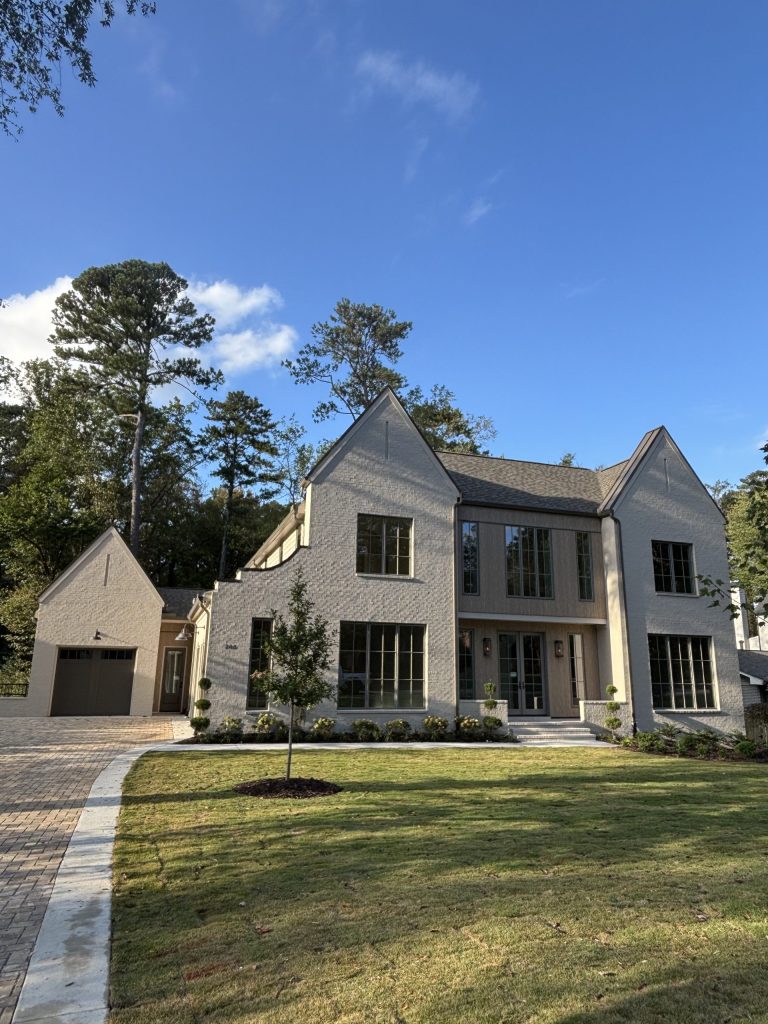
When most homeowners think about exterior painting, they focus on choosing the right color, finding a reliable contractor, and hoping for good weather during the project. What rarely crosses anyone’s mind is the ground beneath their feet—specifically, that distinctive red Georgia clay that defines our landscape. But here’s something we’ve learned after painting hundreds of Atlanta homes from Buckhead to Decatur: that red clay isn’t just affecting your lawn and garden, it’s actively working against your exterior paint in ways that homeowners in other parts of the country simply don’t experience. At OVO Painting, we’ve seen beautiful paint jobs deteriorate prematurely because contractors treated Atlanta homes like they would houses anywhere else, ignoring the unique challenges our iron-rich clay presents. Understanding how this soil composition impacts paint performance is the difference between an exterior paint job that lasts fifteen years and one that starts showing problems within five.
The red clay issue isn’t simply about dirt accumulating on your siding—though that’s certainly part of it. The chemical composition of Georgia’s clay creates specific interactions with paint films that accelerate breakdown, reduce adhesion, and create conditions where mildew thrives. When contractors don’t account for these Atlanta-specific challenges during surface preparation and product selection, they’re setting homeowners up for premature paint failure. The good news is that once you understand what you’re dealing with, there are proven strategies to combat red clay’s effects and achieve paint performance that matches or exceeds what homeowners in easier climates enjoy.
Understanding Georgia’s Red Clay: More Than Just Dirt
Atlanta sits on some of the oldest and most distinctive soil in North America. Our famous red clay gets its color from iron oxide—essentially rust particles distributed throughout the clay composition. This isn’t topsoil that can be amended or replaced; it’s the bedrock-derived clay that forms the foundation of Georgia’s Piedmont region. The iron content that gives our clay its characteristic color ranges from five to eight percent, which is significantly higher than clay in most other parts of the country. This iron-rich composition creates unique properties that affect everything from drainage to construction—and yes, to paint performance.
The clay particles themselves are incredibly fine, much smaller than sand or silt particles. This microscopic size means red clay can become airborne easily, especially during Atlanta’s dry periods in late summer and fall. When construction happens in your neighborhood, when your own yard gets disturbed, or even when strong winds kick up, these fine clay particles get suspended in the air and settle on every surface including your home’s exterior. Unlike regular dust that might brush off easily, red clay particles have electrostatic properties that make them cling to surfaces with surprising tenacity.
What makes this particularly problematic for paint is the clay’s chemical activity. Iron oxide doesn’t just sit inertly on painted surfaces—it can actually interact with the paint binder chemistry, particularly when moisture is present. In Atlanta’s humid climate where dew forms regularly on exterior surfaces, that clay dust gets repeatedly wetted and dried, creating cycles that accelerate paint degradation. The iron compounds can also promote oxidation reactions within the paint film itself, breaking down the polymers that hold the coating together. This is why homes near construction sites or in areas with exposed red clay often show paint deterioration patterns that seem disproportionate to the paint’s age.
How Red Clay Accumulation Attacks Your Paint
The process starts the moment your freshly painted home is exposed to Atlanta’s environment. Clay particles settle out of the air onto horizontal and near-horizontal surfaces—porch ceilings, window sills, the top edges of siding boards, decorative trim. These particles are so fine that they work their way into the microscopic texture of even the smoothest paint finishes. Initially, this accumulation just looks like dirt. Homeowners might rinse it off with a garden hose or ignore it entirely if it’s not immediately visible from street level.
But here’s what’s actually happening at the paint film level: those clay particles are creating nucleation sites for moisture retention. When dew forms overnight or after rain, water beads on clean painted surfaces and eventually evaporates. But where clay particles have accumulated, water gets trapped in contact with the paint for extended periods. This prolonged moisture exposure begins to compromise the paint film’s integrity, particularly at the surface. The iron in the clay can act as a catalyst for oxidation reactions that break down paint binders. Over months and years, this chemical attack creates microscopic failures in the paint film that grow into visible problems.
The accumulation doesn’t affect all surfaces equally. North-facing walls that never get direct sun often show the most dramatic clay-related issues because these surfaces stay damp longer and never benefit from the sun’s UV sterilization that inhibits mildew growth. Vertical surfaces shed some clay during rain, but horizontal elements trap it indefinitely. We frequently see porch ceilings, soffit panels, and window headers showing significant deterioration while vertical siding on the same house looks relatively healthy—this differential wear pattern is a telltale sign of clay-related paint failure.
In areas where red clay is disturbed regularly—homes near construction zones, properties with ongoing landscaping work, or houses situated below grade from neighboring lots—the accumulation accelerates. We’ve seen cases where homes less than five years past their last painting are showing chalking and adhesion failure that would normally take ten to twelve years to develop, all because of heavy clay exposure that wasn’t addressed during the original painting or through routine maintenance.
The Mildew Connection: How Clay Creates Perfect Growth Conditions
Atlanta’s humidity alone makes mildew growth a constant challenge for exterior paint. But red clay accumulation supercharges this problem in ways that surprise even experienced homeowners. The clay particles create a slightly porous layer on painted surfaces that holds moisture like a sponge. This thin layer of damp clay provides ideal conditions for mildew spores—constant moisture, organic material from pollen and plant matter that also settles in the clay, and protection from direct sun on shaded surfaces.
What starts as barely visible mildew colonies in this clay layer quickly establishes itself and begins feeding on the paint film itself. Modern paints include mildewcides, but these chemicals get overwhelmed when faced with the constant moisture and organic material present in clay accumulation. The mildew grows not just on the paint surface but actually penetrates into the softened paint film, creating black or green staining that can’t be cleaned without removing some of the paint itself.
This mildew growth accelerates the paint breakdown that clay already promotes. As mildew colonies metabolize paint components, they create microscopic channels through the paint film. These channels allow even more moisture penetration, which supports more mildew growth, creating a destructive cycle. On severe cases we’ve encountered in heavily wooded Atlanta neighborhoods with clay-rich soil, the combination of clay accumulation and mildew growth has completely destroyed paint systems in as little as six to seven years despite the paint being high-quality products that should have lasted twice that long.
Pre-Paint Cleaning: The Critical Step Most Contractors Skip
Here’s where many painting contractors working in Atlanta fail their clients: they treat pre-paint cleaning like it’s a simple hose-down that removes loose dirt. For homes in areas without red clay, that might be sufficient. For Atlanta homes, it’s completely inadequate. Red clay that has accumulated on siding over years creates a contamination layer that will prevent new paint from adhering properly no matter how premium the paint product. This clay must be completely removed, not just rinsed.
Proper clay removal requires pressure washing with the right technique and cleaning solutions. We use a combination of cleaning agents that break down the electrostatic bond between clay particles and the existing paint surface, followed by controlled pressure washing that removes the clay without damaging the substrate. The pressure settings matter tremendously—too little pressure and clay residue remains, too much and you damage the siding or drive water behind it. James Hardie siding, wood siding, and vinyl all require different pressure levels and techniques.
The cleaning must happen well before painting day, not the morning of. Clay-contaminated surfaces need to dry thoroughly after cleaning so any residual moisture doesn’t get trapped under new paint. In Atlanta’s humid climate, this drying period might take two to three days depending on weather conditions. Contractors who show up ready to paint the same day they pressure wash are cutting corners that will come back to haunt you within a few years when paint adhesion fails.
Testing for clay removal completeness is straightforward but rarely done. After cleaning and drying, wiping a white cloth across the surface should show no red or brown transfer. If you still see clay color on the cloth, the surface isn’t clean enough for painting. We often do multiple cleaning passes on heavily contaminated surfaces, particularly on horizontal elements and north-facing walls where clay accumulation is worst.
Product Selection: Primers and Paints That Handle Atlanta’s Clay
Not all primers are created equal when it comes to dealing with surfaces exposed to red clay. Standard primers designed for clean, ideal substrates don’t create adequate adhesion over surfaces that have experienced clay contamination even after cleaning. We use bonding primers specifically formulated to grip challenging surfaces and create a barrier layer between any residual clay and the topcoat system.
These specialized primers contain additives that improve wet adhesion—critical in Atlanta where surfaces experience frequent dew and rain exposure. They also typically include stronger mildewcides because we know that clay accumulation will begin immediately after painting and we need the paint system to resist the mildew growth that accumulation promotes. The cost difference between standard primer and these upgraded products is modest, usually adding a few hundred dollars to a full home exterior paint job, but the performance difference is dramatic.
Topcoat selection matters equally. Paints with higher solids content and advanced acrylic formulations create denser films that resist clay penetration better than budget alternatives. We look for products with good dirt pickup resistance—a property that’s specifically tested and rated by paint manufacturers. In Atlanta’s clay environment, choosing paint with excellent dirt pickup resistance means the difference between siding that looks dingy after two years and siding that maintains its appearance for six or seven years between cleanings.
Self-cleaning paint technologies have emerged in recent years, and while they’re not magic solutions, they do offer real benefits in Atlanta’s clay-rich environment. These paints are formulated so that rain tends to sheet off the surface rather than beading, carrying dirt and clay particles away rather than letting them settle and accumulate. The technology works best on smooth surfaces and vertical walls, less effectively on textured siding or horizontal elements, but even partial improvement in clay shedding extends paint life and reduces maintenance needs.
Ongoing Maintenance in Clay-Heavy Areas
Even with perfect preparation and premium products, Atlanta homes need ongoing maintenance to combat red clay accumulation. We recommend annual cleaning for homes in high-exposure areas—near construction, below neighboring properties, or with significant yard work that disturbs soil. This annual cleaning doesn’t need to be aggressive pressure washing; a gentle spray with appropriate cleaning solution removes clay before heavy accumulation occurs.
Timing this cleaning matters. The ideal window is late winter or early spring after the worst of winter moisture but before pollen season. This removes clay and mildew that accumulated over winter before summer heat locks it in. Fall cleaning works as a second-best option, removing summer accumulation before winter moisture creates mildew problems. The key is making this cleaning routine and preventative rather than waiting until clay accumulation becomes visually obvious.
Pay particular attention to horizontal surfaces during maintenance cleaning. Porch ceilings, window sills, and decorative trim collect clay disproportionately and benefit most from regular attention. These areas often show the first signs of paint failure, and catching problems here early prevents them from spreading to vertical siding. A few hours of focused cleaning annually costs far less than premature repainting because clay damage forced your hand.
Document the condition of your paint through photos taken from consistent angles each year. This creates a visual record of how clay accumulation and any associated deterioration is progressing. If you notice accelerating problems—areas that were fine last year showing issues this year—that’s your signal to increase cleaning frequency or investigate whether something in your property’s grading or landscaping is exposing you to more clay than typical.
When Clay Damage Has Already Occurred
If you’re reading this and realizing that clay accumulation has already compromised your existing paint, don’t panic. The damage can be addressed, though the solution depends on how far the deterioration has progressed. Light to moderate chalking and surface mildew can often be cleaned and then sealed with a quality primer before repainting. The existing paint film, even if damaged, can serve as a base layer if it’s still fundamentally adhered to the substrate.
More severe damage—peeling, flaking, or widespread mildew penetration—requires more aggressive intervention. Failed paint must be scraped away to reach sound material. Areas where mildew has penetrated deeply into the paint film need treatment with mildewcide solutions and thorough drying before new paint goes on. This prep work is labor-intensive and adds cost to the repainting project, but skipping it means the new paint will fail quickly as the underlying problems reassert themselves.
In extreme cases where clay exposure has been severe and prolonged—think homes downhill from major construction projects or properties with years of deferred maintenance—the best solution might be stripping to the substrate and starting fresh. This is expensive and disruptive, but it’s sometimes the only way to ensure the new paint system has a clean foundation. The silver lining is that properly executed remediation followed by clay-appropriate painting gives you a result that will outperform the original paint job that failed prematurely.
Trust Atlanta Expertise for Clay-Challenged Homes
At OVO Painting, we don’t treat Atlanta homes like they’re located anywhere else in the country. We understand red clay because we work with it every day across Buckhead, Midtown, Decatur, Brookhaven, and throughout the metro area. We know which neighborhoods have the most challenging clay exposure, we recognize the telltale signs of clay-related paint failure, and we have proven protocols for both preventing these problems on new paint jobs and remediating them when they’ve already occurred.
If your home’s exterior paint is showing premature aging, unexplained chalking, persistent mildew, or just doesn’t look as good as it should for its age, red clay contamination might be the culprit. Contact OVO Painting today for an assessment that considers Atlanta’s unique environmental challenges. We’ll tell you honestly what role clay is playing in your paint’s condition and what it will take to achieve lasting results that stand up to everything Georgia’s red clay can throw at them. Don’t settle for contractors who don’t understand local conditions—reach out now and get the Atlanta-specific expertise your home deserves.