

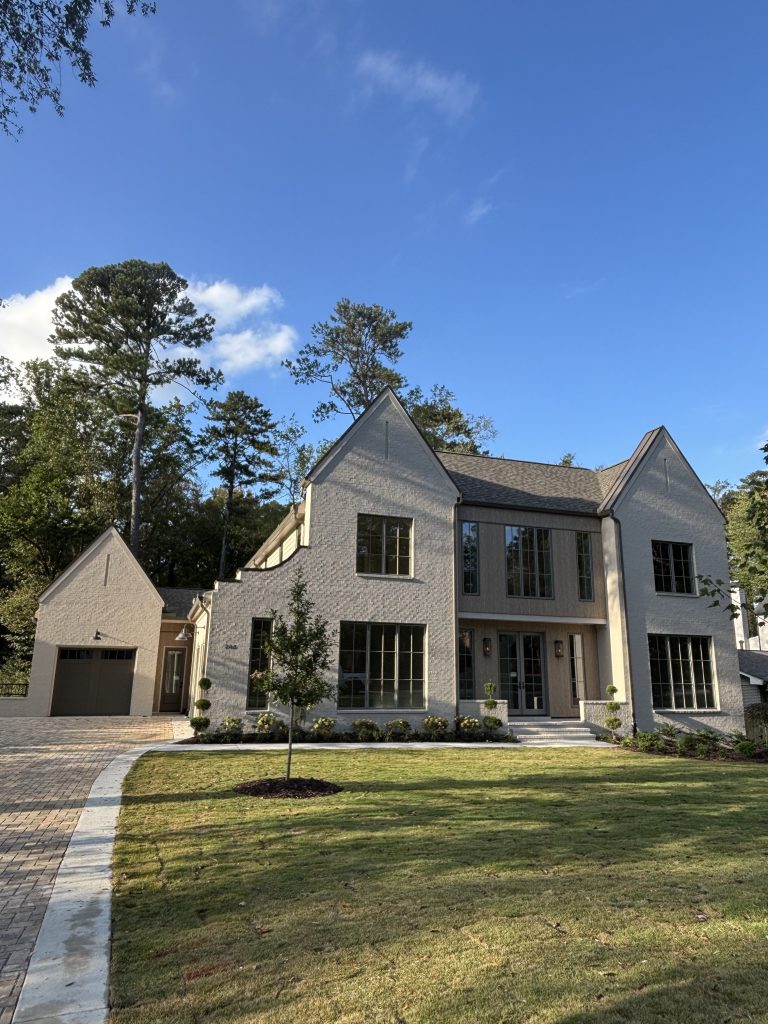
How much does it really cost to paint a 2000 sq ft house exterior in 2025?
The typical cost to paint a 2000 sq ft house exterior in 2025 ranges from $3,500 to over $9,000, with many projects landing between $4,500 and $7,500. However, this common question is based on a flawed premise. The living space of your home has very little to do with the final price. The true cost is determined by its paintable surface area and three critical multipliers: architectural complexity, surface condition, and site accessibility, which can easily double the project’s expense.
The 2000 Sq. Ft. Myth: Why Your Home’s Footprint Isn’t the Whole Story
When you begin to budget for painting a 2000 sq ft home exterior, the first number you encounter—the square footage of your living space—is the most misleading. It’s a metric for real estate agents and tax assessors, not professional painters. A sprawling single-story 2000 sq. ft. ranch has a dramatically different exterior profile than a compact, two-story 2000 sq. ft. colonial. The ranch may have longer walls but is easier to access, while the colonial has less horizontal length but significantly more height and vertical complexity.
Professional contractors don’t base their quotes on floor plans. Instead, they calculate the home’s total paintable surface area. This critical distinction is the foundation of an accurate estimate. As industry experts at HomeAdvisor confirm, “When calculating painting cost, you must find the ‘total paintable area’ of the exterior walls, not just the home’s floor area.” This is the actual square footage of siding, trim, soffit, and fascia that will receive paint.
How to Estimate Your Home’s Paintable Surface Area
While a professional will take precise measurements, you can create a rough estimate to better understand the quotes you receive. Here’s a simplified method:
- Measure the Perimeter: Walk the exterior of your home with a measuring tape and add up the length of all the walls. This is your home’s perimeter. (e.g., 50 ft + 50 ft + 40 ft + 40 ft = 180 ft perimeter).
- Determine the Height: Measure the height from the foundation to the roofline. For a single-story home, this is typically 9-10 feet. For a two-story home, it might be 18-22 feet. Be sure to measure gables (the triangular part of the wall under the roof) separately. A simple formula for a gable is (Base x Height) / 2.
- Calculate Gross Wall Area: Multiply the perimeter by the average wall height. (e.g., 180 ft perimeter x 10 ft height = 1,800 sq. ft. of wall area). Add the area of any gables.
- Subtract Non-Paintable Areas: Measure the approximate square footage of large doors and windows that will not be painted and subtract this from your total. (e.g., 1,800 sq. ft. – 250 sq. ft. for windows/doors = 1,550 sq. ft. of primary paintable surface).
This simple calculation immediately shows why a 2000 sq. ft. house is not a reliable pricing unit. The true paintable area is what matters, and it’s the starting point from which all other costs are added.
The Complexity Factor: How Gables, Trim, and Dormers Drive Up Labor Costs
Once you have a baseline paintable area, the next major driver of your exterior home painting service price is architectural complexity. The difference in labor between painting a simple, flat-sided rectangle and a Victorian-style home with intricate details is immense. Think of it as the difference between painting a blank canvas and a detailed sculpture—both may occupy the same space, but one requires far more time and skill.
Key architectural elements that multiply labor costs include:
- Stories and Height: This is the most significant complexity. The work slows down considerably when painters are on ladders or scaffolding. In fact, research shows that painting a two-story house can cost up to 50% more than a one-story house of the same footprint due to the added setup time and safety precautions. This is where a simple “painting a single story 2000 sq ft house cost” search will give a much lower number than the “cost to paint a 2 story 2000 sq ft house exterior.”
- Detailed Trim and Millwork: Homes with extensive crown molding, window casings, dentil molding, and detailed fascia require hours of meticulous “cutting in” with a brush. This is precise, slow work compared to spraying or rolling large, flat sections of siding. The cost to paint soffit and fascia on a 2000 sq ft house can be a substantial part of the budget if the design is intricate.
- Gables, Dormers, and Eaves: Each peak, valley, and overhang adds time. These areas often require more ladder repositioning and careful work to ensure clean lines and full coverage.
- Multiple Colors and Accents: A simple, one-color paint job is the most straightforward. If you plan to use a different color for the trim, another for the shutters, and a third for the doors, each new color adds significant time for masking, cleaning brushes, and careful application to prevent overlap. The cost to paint shutters and doors on a 2000 sq ft house might seem small, but it adds up in labor.
These features can easily double the labor cost to paint a 2000 sq ft house exterior when compared to a structure with a simple design. When you get a quote, it’s crucial to ensure the contractor has accounted for every dormer and detail.
Beyond the Power Wash: Why Surface Preparation is the Biggest Cost Variable
If architectural complexity sets the baseline for labor, the condition of your home’s exterior is the single biggest variable that can cause a quote to skyrocket. “Prep work” is a simple line item on an estimate, but it can encompass anything from a quick wash to a multi-day restoration project. This is where a high-quality exterior paint job is truly made or broken.
A professional exterior painting prep work cost breakdown should detail the specific tasks required for your home, which may include:
- Level 1: Basic Cleaning. For a home in excellent condition (like new construction), a simple power wash to remove dirt, pollen, and chalking paint might be all that’s needed. This is the quickest and least expensive form of prep.
- Level 2: Minor Scraping and Sanding. Most homes have at least some areas of peeling or cracking paint. These sections must be meticulously scraped by hand, then sanded to create a smooth, sound surface for the new paint to adhere to. The cost to scrape and paint a 2000 sq ft house will always be higher than one that only needs washing.
- Level 3: Extensive Repairs. This is where costs can climb significantly. Prep work may involve caulking all gaps and cracks in siding and around windows, priming bare wood, replacing rotten trim boards, or patching cracks in stucco. This is not just painting; it’s carpentry and repair work, and it’s essential for a durable finish.
- Level 4: Full Restoration. On older homes, this could mean stripping multiple layers of old paint, making significant wood repairs, and even using specialized primers to seal and stabilize the surface.
The type of siding on your home also dramatically impacts the prep process and cost. According to Angi, siding material is a major cost factor; painting stucco and brick can cost nearly twice as much per square foot as painting vinyl or wood. This is because porous surfaces like brick or stucco require more prep, specialized primers, and significantly more paint to achieve proper coverage. Similarly, the cost to paint aluminum siding on a 2000 sq ft house may involve different cleaning agents and primers than the cost to paint Hardie board siding.
The Accessibility Premium: Landscaping, Lot Grade, and Reaching High Places
The final, often overlooked, cost multiplier is the accessibility of your property. If painters can’t easily and safely reach the surfaces, the job will take longer and require more equipment, directly impacting the price.
Consider these common accessibility challenges:
- Steep Lot Grades: A house built on a hill requires extensive, careful ladder placement and leveling. What takes one hour on flat ground could take two or three on a steep grade due to the constant need for safe setup.
- Dense Landscaping: Mature trees, dense shrubbery, and trellises right up against the house create obstacles. Crews need to spend extra time protecting these plants and carefully working around them. In some cases, pruning may be necessary.
- Hard-to-Reach Areas: Walls that are close to a neighbor’s property line, above a deck or porch roof, or blocked by power lines require specialized equipment like boom lifts or intricate scaffolding. The exterior painting cost including scaffolding for a 2-story house will be notably higher than one accessible by ladders alone.
Height is a direct and quantifiable cost factor. Data from HomeAdvisor clearly shows that labor costs increase significantly with height: expect a 30% increase for areas above 8 feet and a 120% increase for areas above 19 feet. This premium accounts for the increased risk, slower pace, and additional equipment needed to work safely at elevation.
Comparing the Metrics: House Square Footage vs. The True Cost Formula
Understanding these factors empowers you to evaluate quotes more effectively. Here’s a clear comparison of the two approaches to pricing an exterior painting project.
House Square Footage (Flawed Metric)
- Pros: Simple and requires no effort from the homeowner. It’s a number you already know.
- Cons: Highly inaccurate and fails to account for height, complexity, condition, or access. It often leads to vague “ballpark” estimates and can result in surprise charges or corners being cut when a contractor realizes they underbid the job.
Paintable Surface Area & Cost Multipliers (Accurate Metric)
- Pros: Provides a transparent and realistic foundation for a budget. It forces a detailed evaluation of your home’s specific needs (prep, repairs, access) and leads to a comprehensive, itemized quote. This method ensures you are comparing apples to apples when looking at different bids.
- Cons: Requires more effort upfront, both from you to understand the concepts and from the contractor to perform a thorough on-site inspection and measurement.
Frequently Asked Questions About Painting a 2000 Sq. Ft. Home
What’s the average cost to paint a 2000 square foot house?
While the overall range can be wide, most homeowners with a 2000 sq. ft. house of average complexity and condition can expect to see quotes between $4,500 and $7,500 in 2025. According to This Old House, the average cost to paint a home exterior is between $1.50 and $4 per square foot of paintable area. For a home with 2,000 sq. ft. of paintable surface, this translates to $3,000 to $8,000, aligning with the project-based estimates. Remember, this price can swing dramatically based on the factors we’ve discussed.
How much paint do I need for the exterior of a 2000 sq ft house?
The amount of paint depends on your paintable surface area, not the home’s living space. A good rule of thumb is that one gallon of high-quality exterior paint covers about 350-400 square feet with one coat. A professional job requires two full coats for durability and color richness. So, for a home with 1,800 sq. ft. of paintable siding, you would calculate: (1,800 sq. ft. / 350) x 2 coats = ~10.3 gallons. It’s wise to purchase 11-12 gallons for the siding. Trim paint is calculated separately and usually requires 2-4 gallons depending on the extent of your trim work.
How long does it take to paint the exterior of a 2000 square foot house?
The exterior painting project timeline for a 2000 sq ft house depends entirely on the prep work and complexity. For a simple, one-story ranch in good condition, a professional crew might complete the job in 4 to 6 days. For a more complex two-story home requiring extensive scraping, sanding, and repairs, the project could easily take 10 days to 3 weeks. A typical timeline looks like this:
- Day 1: Power washing and cleaning.
- Day 2-3: Drying time (crucial and weather-dependent).
- Day 4-7: Scraping, sanding, caulking, priming, and masking. This is the longest phase.
- Day 8-10: Application of the two finish coats of paint.
- Day 11: Final touch-ups, cleanup, and project inspection.
Making the Right Choice for Your Needs
Understanding what drives the cost to paint your house exterior is the first step. The next is to apply that knowledge to your specific situation and goals. Not every homeowner has the same priority, so finding the right contractor means finding one who aligns with your needs.
For The Budget-Conscious Homeowner
You’re focused on getting a fair price and a durable finish without breaking the bank. Your biggest risk is accepting a vague, low-ball offer that hides future costs. When getting quotes, insist on an itemized breakdown of the prep work. Ask specifically: “How many hours do you estimate for scraping and sanding?” or “What is your process for handling peeling paint?” A contractor who can’t answer this in detail may be planning to simply “paint over” problems, which will cost you more when the new paint fails in a year or two.
For The Quality-Focused Renovator
You may have an older home or one with unique architectural details, and your top priority is a high-quality, long-lasting result that protects your investment. Price is secondary to craftsmanship. You should seek a contractor who talks more about their process than their price. Look for detailed proposals that specify the exact types of primer (e.g., oil-based spot primer for bare wood) and caulk (e.g., 50-year elastomeric) they use. Ask about their approach to wood rot and how they ensure a perfectly smooth finish. A premium job costs more because 70-80% of the work is done before a can of paint is even opened.
For The First-Time Requester
You’re new to the process and simply want to understand what a fair price to paint the outside of your 2000 sq ft house is. Your main goal is education and confidence. Use the information in this guide to shift your thinking. When you call a contractor, don’t start with “How much to paint a 2000 sq ft house?” Instead, say, “I’d like to get a detailed estimate to paint my home’s exterior. Could you walk me through how you’ll assess the condition, complexity, and access to provide an accurate quote?” This signals that you’re an informed consumer and encourages a more transparent, detailed conversation from the start.
Ultimately, a detailed, transparent quote that is based on your home’s unique characteristics is the only way to get a reliable price. A contractor who takes the time to measure, inspect, and explain the “why” behind their numbers is one who respects your home and your investment.
At OVO Painting of Atlanta, GA, we believe an educated customer is the best customer. Our process is built on a foundation of thorough inspection and clear communication, ensuring our quotes are comprehensive and accurate—with no surprises. If you’re ready for a detailed, no-obligation assessment of your home’s exterior painting needs, contact our expert team today for your free, personalized quote.